The abbreviation EMI means Electromagnetic Interference which is a disturbance caused to one electrical device by another electrical device. This happens either via direct or indirect contact. Direct contact is called conducted EMI and indirect or non-contact induction is called radiated EMI.
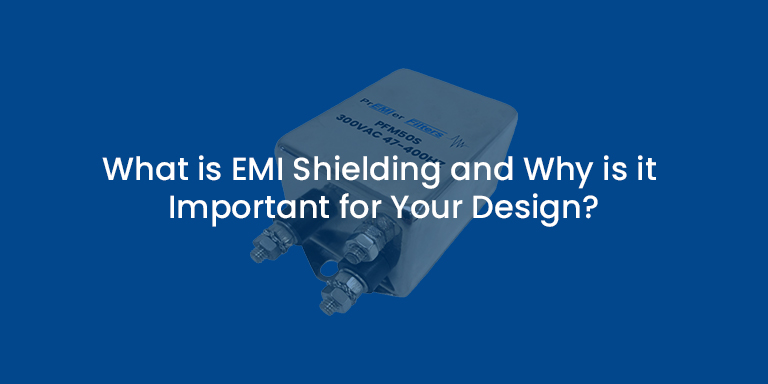
An EMI filter is a device that is used as a protection shield from EMI. The EMI filter is either present in the circuit board of the electrical device or it is presented separately. Whether the EMI filter is a segregated device or embedded into the circuit, it will be a part of every electronic device. In general, low pass filters make up the bulk of EMI filters used in electronic devices. These filters will pass low frequency signals, such as 60hz power, and attenuate higher frequencies. In general, an EMI filter provides filtering over a broad range of frequencies with the upper range extending into the high MHZ frequencies. This is primarily achieved through the use of passive components, such as capacitors and inductors.
The position and location of the EMI filter in a device plays an important role in the filter achieving maximum performance. A filter should be located as close as possible to the noise generating circuits and at cable and wire egress points. The latter is to maintain the overall isolation and shielding performance of the host metal cabinet. This also requires that the filter metal housing be properly bonded to the host cabinet. Non-conductive surfaces are to be avoided in which the filter housing is to be metal-metal bonded to the host cabinet.
Types of EMI Filters
EMI filters are classified into two types, passive and active EMI Filters, in which passive filtering finds the greatest application and use.
Passive EMI filters consist of inductors and capacitors arranged in specific circuits to achieve the desired filtering. A filter’s performance is dependent upon the host circuit’s source and load impedances and is critical to understand if the filter is to achieve its intended performance. Additional considerations include capacitor lead layout, placement of components to minimize cross coupling and near field radiation effects and proper selection of the magnetic core material to use in the inductors.
Active filters are thus named as they use active circuits (e.g. op-amps) in conjunction with passive components to achieve the desired filtering. Types of Active EMI filters include Current Sensing Voltage cancellation (CSVC), Voltage-Sensing Voltage-cancellation (VSVC), Current- Sensing Current Cancellation(CSCC), & Voltage-Sensing Current cancellation(VSCC). Active filters tend to play a greater role in low level circuits as compared to higher voltage/current input AC power circuits and can be limited in bandwidth effectivity relative to passive filters.