EMP Filters: Protecting Critical Infrastructure from E1, E2 & E3 Electromagnetic Pulses
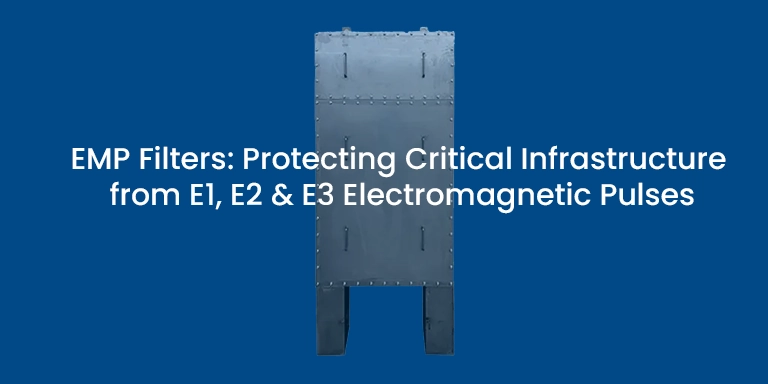
Modern military, government, utility, and critical infrastructure facilities depend on electronic systems that must continue operating during the most severe electromagnetic events. A High-Altitude Electromagnetic Pulse (HEMP), generated by a nuclear detonation high above the Earth’s surface, can produce intense electromagnetic energy capable of damaging electrical and electronic equipment over a vast geographic area.
To protect these facilities, engineers rely on a comprehensive HEMP protection strategy that includes shielding, grounding, bonding, and one of the most important components—the EMP power line filter.
Understanding the EMP Threat
A HEMP event consists of three distinct pulse components known as E1, E2, and E3. Each has different characteristics and affects electrical systems in different ways. An effective EMP filter must be designed to address all three.
E1 – The High-Speed Electronic Threat
The E1 pulse is the fastest and most destructive component of an EMP event. With a rise time measured in nanoseconds, E1 can induce extremely high voltages and currents into power and signal conductors before conventional protective devices have time to respond.
The E1 pulse primarily threatens:
- Computers and servers
- Industrial control systems (PLCs)
- Communications equipment
- Network infrastructure
- Security systems
- Sensitive electronic devices
Because of its extremely fast rise time, protecting against E1 requires specialized EMP filters capable of attenuating high-frequency conducted energy before it reaches critical equipment.
E2 – The Intermediate Pulse
The E2 pulse follows immediately after E1 and is similar to lightning-induced electrical surges. While many facilities use surge protection devices to guard against lightning, those devices may already have been damaged or degraded by the preceding E1 pulse.
A properly engineered EMP filter continues to provide protection during both the E1 and E2 portions of the event, helping preserve the operation of mission-critical systems throughout the disturbance.
E3 – The Long-Duration Pulse
Unlike E1 and E2, the E3 pulse lasts from several seconds to minutes and behaves much like a severe geomagnetic storm.
Rather than attacking individual electronic components, E3 induces large currents into long conductors, including:
- Utility transmission lines
- Facility power feeders
- Grounding systems
- Transformers
- Backup generators
- Long cable installations
These induced currents can overload transformers, disrupt power distribution systems, and contribute to extended electrical outages across large geographic regions.
The Importance of MIL-STD-188-125-1A
The current U.S. Department of Defense standard for protecting fixed, ground-based facilities against High-Altitude Electromagnetic Pulse is MIL-STD-188-125-1A.
This standard establishes performance requirements and verification methods to help ensure mission-critical facilities continue operating following a HEMP event. Rather than prescribing a specific filter design, it defines system-level performance objectives that must be achieved through proper engineering, testing, and installation.
Compliance with MIL-STD-188-125-1A typically requires an integrated protection approach that includes shielding, grounding, bonding, penetration protection, and high-performance EMP filters installed at every electrical service entrance.
Why EMP Filters Matter
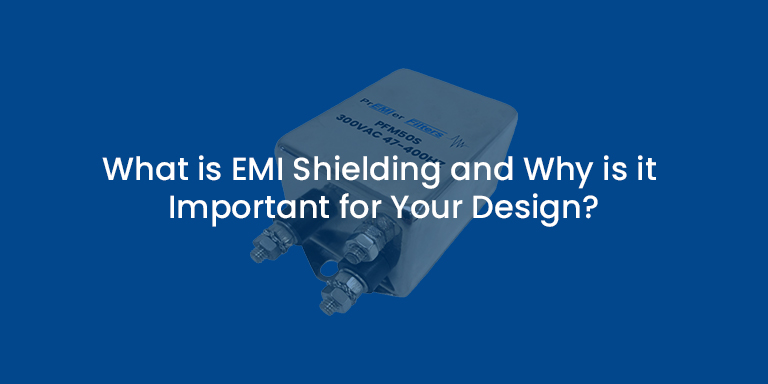
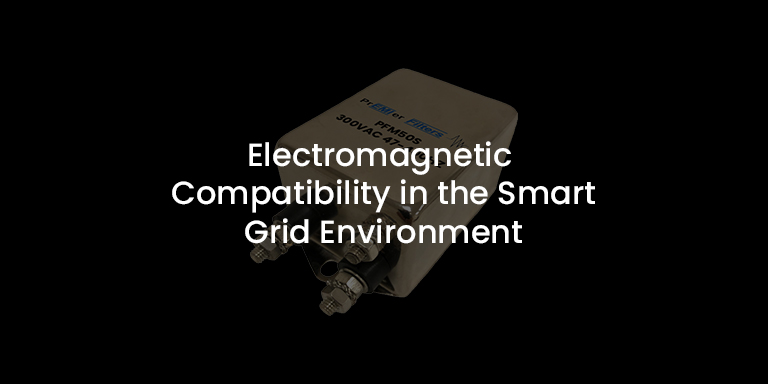
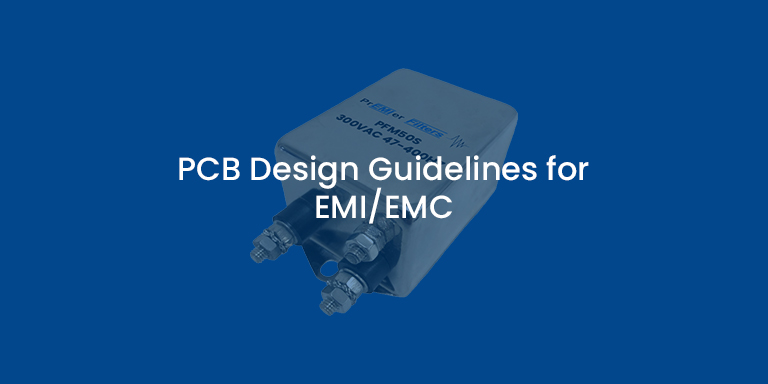
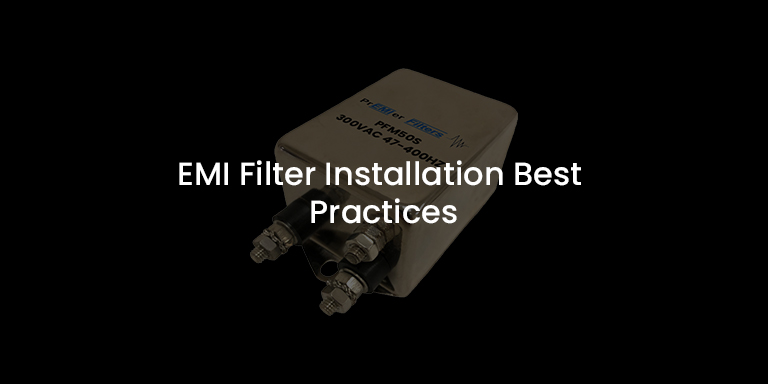
EMP filters serve as the primary barrier that prevents destructive electromagnetic energy from entering a protected facility through incoming power lines.
High-performance EMP filters should be designed to:
- Attenuate the ultra-fast E1 pulse
- Withstand repeated E2 surge events
- Support protection against E3-induced conducted currents
- Maintain reliable electrical performance during normal operation
- Provide long-term durability in mission-critical environments
Not all EMI filters are suitable for EMP protection. Filters intended for HEMP applications require specialized electrical design, robust construction, and performance characteristics capable of supporting the demanding requirements of MIL-STD-188-125-1A.
Protecting Mission-Critical Facilities
EMP filters are used to protect a wide range of critical infrastructure, including military installations, SCIF and TEMPEST facilities, emergency operations centers, telecommunications systems, utility control facilities, industrial process controls, and data centers where continuous operation is essential.
As dependence on digital technology continues to grow, protecting power entry points against electromagnetic threats has become an increasingly important part of resilient facility design.
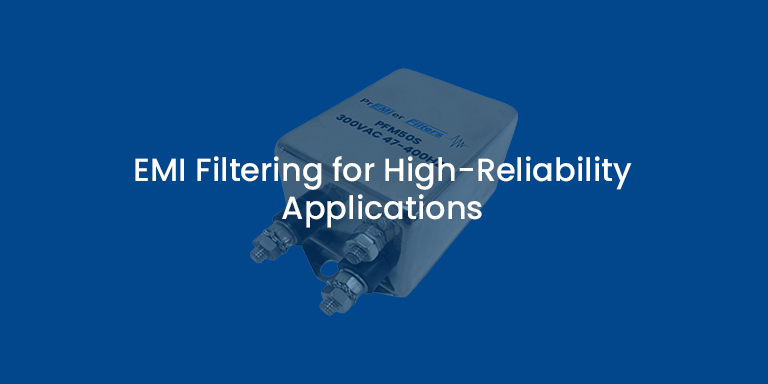
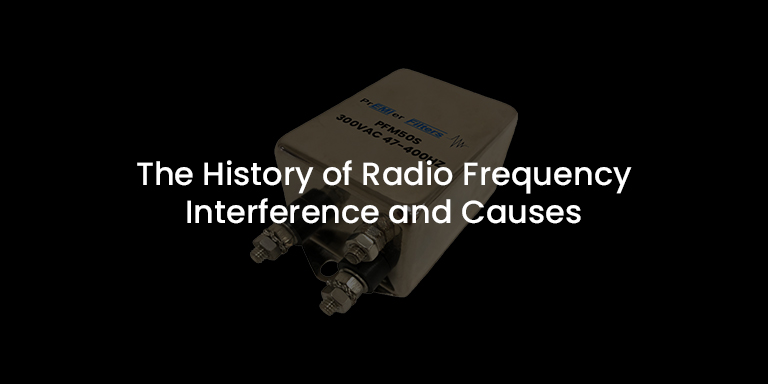
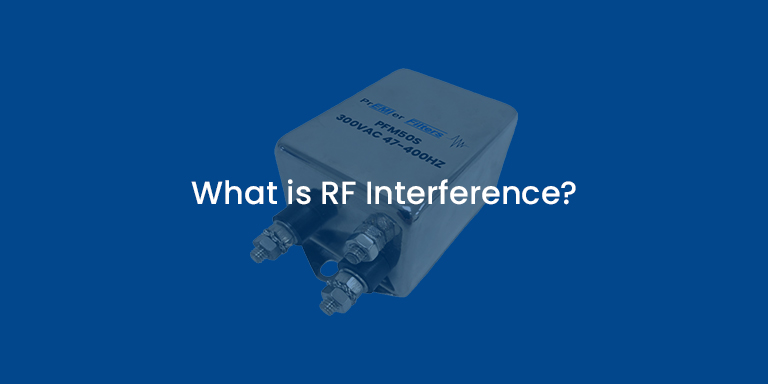
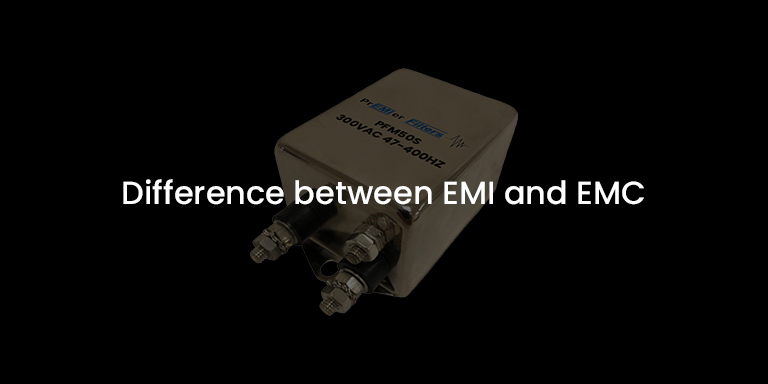
Premier Filters Inc. designs and manufactures high-performance EMI and EMP power line filters for mission-critical applications. Engineered for integration into HEMP protection systems supporting the requirements of MIL-STD-188-125-1A, our filters help safeguard critical infrastructure against the damaging effects of the E1, E2, and E3 components of a High-Altitude Electromagnetic Pulse—helping ensure operational continuity when it matters most.