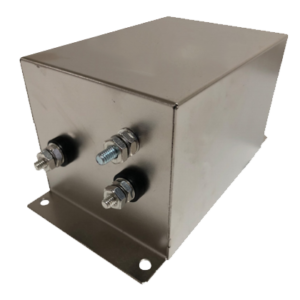
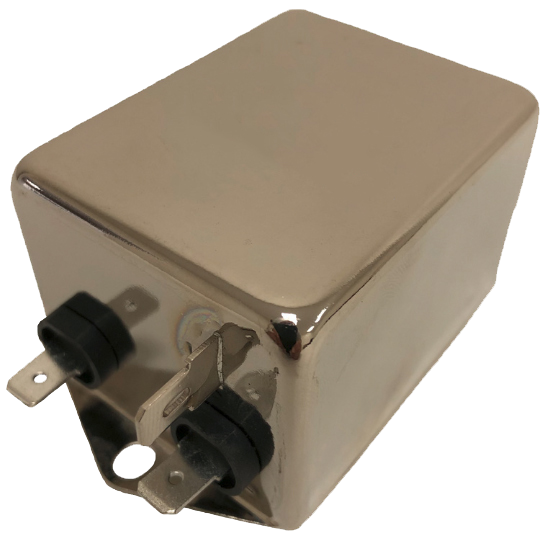
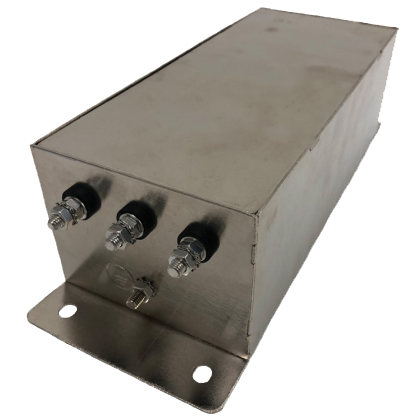
Electromagnetic interference (EMI) is primarily defined as unintended harmonic energy generated by rapid changes in circuit voltage and current (dv/dt and di/dt). These disturbances are most commonly produced by power conversion equipment, switching power supplies, and high-speed digital logic circuits. Once generated, this energy can propagate both internally and externally through conduction and radiation leading to degraded signal integrity, disruption of sensitive electronics, or even permanent component damage. Ultimately, unmanaged EMI can compromise overall system reliability and performance. An EMI filter is typically installed at the power entry point of equipment to suppress this unwanted energy below acceptable operational thresholds and ensure compliance with regulatory standards. These standards are governed by organizations such as the FCC, EN/CE, and various military and government agencies. The primary frequency ranges of concern span from 10 kHz to 10 MHz in military applications and 150 kHz to 30 MHz in commercial and industrial environments. From a design perspective, EMI filters rely on carefully engineered passive networks, primarily inductors and capacitors to provide broadband attenuation of both common-mode and differential-mode noise.
Premier Filter builds on these fundamentals with advanced engineering capabilities specifically tailored for high-security and mission-critical environments. As a trusted supplier of SCIF EMI filtration systems, we design and manufacture custom solutions capable of achieving 100 dB attenuation starting as low as 14 kHz and extending up to 40 GHz well beyond conventional filter performance ranges. Equally important, our designs maintain exceptionally low kVAR levels, minimizing reactive power impact on the electrical system, an achievement that differentiates us within the industry.
Our capabilities extend beyond performance alone. Premier Filter specializes in solving complex electromagnetic compatibility (EMC) and power quality challenges through a combination of advanced modeling, precision component selection, and proprietary design techniques. This allows us to deliver highly optimized solutions that meet stringent security standards without compromising efficiency, thermal performance, or long-term reliability. In addition, Premier Filters is recognized for its rapid response and agile manufacturing capabilities. We understand that SCIF and secure facility projects often operate under compressed timelines. Our streamlined design-to-production process enables fast prototyping, testing, and delivery of custom EMI filters ensuring project schedules are met without sacrificing performance or compliance. This combination of deep technical expertise, high-performance design, and accelerated delivery reinforces Premier Filter’s position as a leading partner for defense, government, and critical infrastructure applications where EMI control is not just important but mission essential. Call +1 (657) 226-0091 or email info@premieremc.com to see how Premier Filters can deliver your project on-time and on-schedule.
FAQ
An EMI (Electromagnetic Interference) filter reduces unwanted electrical noise on power and signal lines, helping electronic equipment operate reliably. EMI filters are especially important in military, industrial, and other high-performance systems where interference can disrupt operation, degrade performance, or cause compliance failures.
EMI filters are available in several configurations, including single-phase, three-phase, AC, DC, and specialized military COTS EMI filters. Each type is designed for specific voltage, current, frequency, and environmental requirements across industrial, medical, commercial, and defense applications.
Choosing the right EMI filter depends on your system’s operating voltage, current rating, frequency range, and required compliance standards. Key factors to review include insertion loss, leakage current, mounting style, environmental ratings, and certifications to ensure the filter performs effectively in the intended application.
EMI filters are widely used in military and defense systems, industrial equipment, medical devices, telecommunications infrastructure, transportation systems, and commercial electronics. Any application that requires dependable operation and reduced electrical noise can benefit from EMI filtering.
Common-mode noise appears on multiple conductors at the same time relative to ground, while differential-mode noise appears between two conductors. Effective EMI filter design addresses both noise types to provide comprehensive interference suppression.
EMI filters should comply with relevant international and industry standards such as IEC, UL, and applicable MIL-STD requirements. Military COTS EMI filters are built to meet demanding defense and industrial expectations. Compliance ensures reliable operation, supports regulatory approval, and reduces risk in harsh environments.
For best performance, install the EMI filter as close as possible to the equipment power entry point, use proper grounding, and keep input and output wiring separated and as short as possible. These practices maximize noise suppression and maintain system reliability.
Insertion loss measures how effectively an EMI filter attenuates unwanted frequencies. Higher insertion loss generally indicates better noise suppression, making it a critical parameter for sensitive and mission-critical systems.
Passive EMI filters use inductors and capacitors to suppress noise without requiring power. Active filters use powered circuits to counteract interference. In military and rugged environments, passive EMI filters are typically preferred due to their reliability and simplicity.
EMI filters improve device performance, protect sensitive electronics, reduce signal errors, support compliance with EMC standards, and minimize downtime caused by electrical interference.
Our Latest Blogs
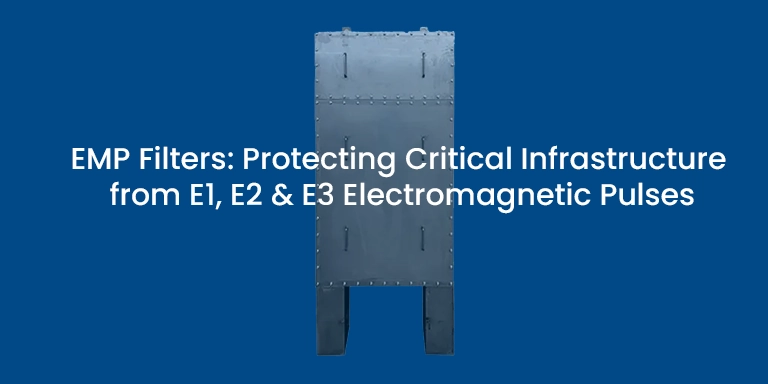
EMP Filters: Protecting Critical Infrastructure from E1, E2 & E3 Electromagnetic PulsesJuly 20, 2026-Modern military, government, utility, and critical infrastructure facilities depend on electronic systems that must continue operating during the most severe electromagnetic events. A High-Altitude Electromagnetic Pulse (HEMP), generated by a nuclear detonation high above the Earth’s surface, can produce intense electromagnetic energy capable of damaging electrical and electronic equipment over a vast geographic area. To …
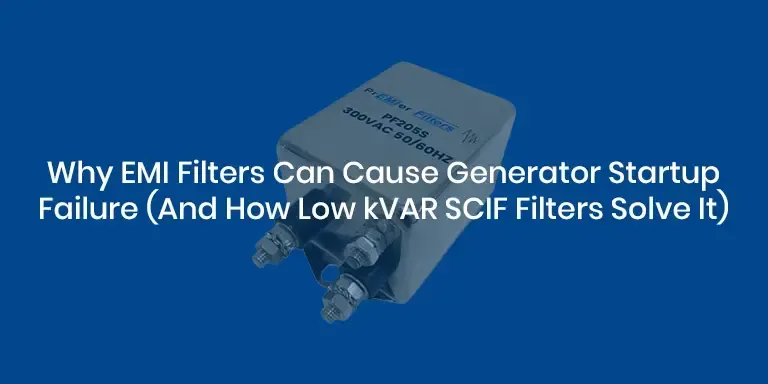
Why EMI Filters Can Cause Generator Startup Failure (And How Low kVAR SCIF Filters Solve It)April 8, 2026-Introduction In mission-critical environments such as SCIF facilities, data centers, and defense installations, backup power is not optional, it is essential. However, a commonly overlooked issue can prevent emergency generators from starting: high kVAR EMI filters. While EMI filters are necessary for compliance and system protection, traditional designs can introduce excessive reactive power, creating serious …
Facility Power Filters: Enhancing Electrical Safety and PerformanceJune 23, 2023-Facility EMI (Electromagnetic Interference) filters have emerged as crucial components in modern electrical systems. These filters are specifically designed to mitigate the harmful effects of electromagnetic interference, ensuring the safe and efficient operation of various equipment and systems within a facility. In this article, we will explore the fascinating world of Facility EMI Filters, their …
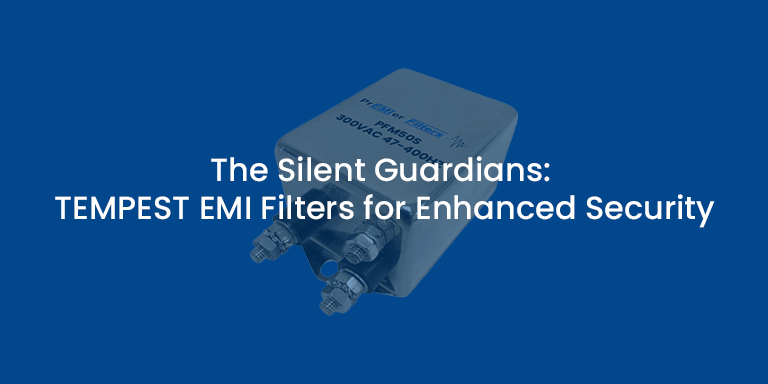
The Silent Guardians: TEMPEST EMI Filters for Enhanced SecurityMay 29, 2023-In today’s high-tech world, the security of sensitive information is of paramount importance. One often-overlooked aspect of information security is the protection against compromising emanations or TEMPEST. TEMPEST refers to the unintentional leakage of electromagnetic signals from electronic devices that can be intercepted and decoded by malicious actors. TEMPEST EMI filters play a crucial role …
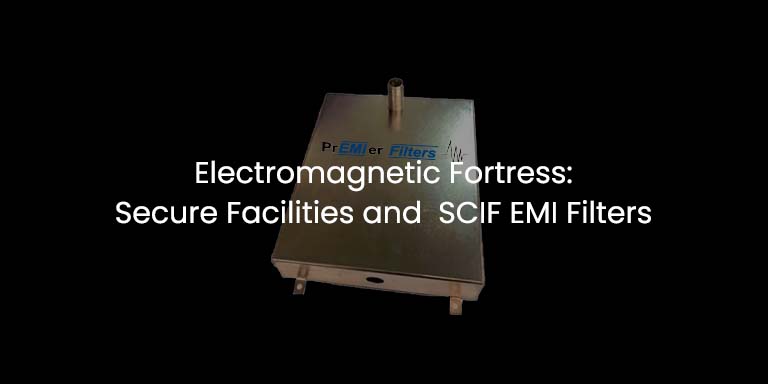
Electromagnetic Fortress: Secure Facilities and SCIF EMI FiltersApril 28, 2023-Electromagnetic interference (EMI) can pose significant threats to the operation and security of sensitive electronic equipment in secure facilities. These facilities, which include data centers, military installations, and research laboratories, house critical infrastructure and valuable information that need to be protected from external and internal EMI sources. EMI filters play a vital role in maintaining …
Ways to Reduce Power-Supply NoiseAugust 5, 2021-Noise is undesired harmonic energy resulting from fast changes in voltage and current in electronic equipment and circuits. In a power supply, this is primarily caused by the high frequency power conversion switching circuits (e.g. PWM). This noise can conduct onto and radiate from PCB traces and wires and cables. Several common practices can be …
Where Can EMI/RFI Come FromJuly 15, 2021-Electromagnetic Interference (EMI) and Radio Frequency Interference (RFI) are two sides of the same phenomenon in which electronic devices produce and are affected by electromagnetic radiation. The terms RFI and EMI are frequently used interchangeably as radio waves are merely a subset of the electromagnetic spectrum. EMI/RFI are becoming more of a problem in today’s …
What is Low-Pass FilterJune 9, 2021-A filter that passes frequencies below a certain frequency and blocks signals above this frequency is known as a low-pass filter. The point where this occurs is called the cut-off frequency and is typically the point where the frequency response drops -3dB from the passband. Ideally, the frequency response drops at the cut-off frequency, but …
EMI Filters: Working Principles and TypesMay 24, 2021-The abbreviation EMI means Electromagnetic Interference which is a disturbance caused to one electrical device by another electrical device. This happens either via direct or indirect contact. Direct contact is called conducted EMI and indirect or non-contact induction is called radiated EMI. An EMI filter is a device that is used as a protection shield …
What is EMI Shielding and Why is it Important for Your Design?May 3, 2021-An EMI shield is a metal housing or structure that blocks electromagnetic fields from radiating and coupling into other circuits and systems. EMI shields protect electrical/electronic devices from external radiation that can interfere with sensitive circuits and cause operation failures, loss of data and system malfunctions. EMI shielding can come in many forms and metal …
Electromagnetic Compatibility in the Smart Grid EnvironmentMarch 25, 2021-For continuous reliable real-time operation in areas where Smart Grid equipment will operate, one must consider the surrounding EMC environment. The components and devices of the Smart Grid system are subjected to a wide range of noise sources that can disrupt all electronic systems, including the smart grid systems. These noise sources can be conducted …
PCB Design Guidelines for EMI/EMCMarch 8, 2021-In this blog post, we present some general PCB (Printed Circuit Board) design rules. Although, PCB design can have the greatest impact on radiated noise, it also helps to control coupling of noise to the power cord and reduces common-mode coupling of noise to the ground or chassis. The following lists some basic considerations in …
EMI Filter Installation Best PracticesFebruary 26, 2021-EMI (Electromagnetic Interference) filters are a necessary component for most types of systems or equipment as it enables proper operation without interference to or from other systems. A key parameter to maintaining EMI filter performance is proper installation. Grounding/bonding, wiring, and mounting each play an important role in achieving maximum filter effectiveness. Grounding/Bonding EMI filters …
Process for Selecting an EMI FilterDecember 3, 2020-Modern-day electrical and electronic devices utilize HF (high-frequency) switching circuits that generate HF harmonics that can propagate via cables or air. This high-frequency noise is known as EMI (electromagnetic interference) which can cause disturbance or malfunction to nearby equipment and electronic systems. In reducing EMI that propagates via cables, EMI filters can be an effective …
EMI And EMC Testing: What Is It And Why Is It Necessary?October 20, 2020- EMI and EMC EMI (Electromagnetic Interference) can disrupt the operation of an electronic device that is placed close to the electromagnetic energy of an external electrical source (natural or man-made). Disruption may cause the failure of the device, or the device may not be able to function properly. EMI sources can be natural or …
Comparison of Active and Passive EMI FiltersSeptember 17, 2020-When a product is unable to pass EMC certification due to some mysterious EMI source, the manufacturer will probably start redesigning the product by rearranging the components. However, there may be more ways to suppress specific sources of EMI. The manufacturer can use a variety of EMI filters to suppress EMI in different frequency ranges. …
Mechanism of Causing Electromagnetic NoiseSeptember 1, 2020-Electromagnetic Interference (popularly known as EMI) is an electromagnetic/electrical disturbance that causes the malfunctioning or degradation of electrical equipment. It can not only lead to the loss of transmitted data, but it can also damage the equipment completely. Despite all the disruptions caused due to EMI, it is common in the modern environment. EMI occurs …
EMI Filtering for High-Reliability ApplicationsAugust 3, 2020-Signal transmission and integrity can be disrupted by electrical noise, or Electromagnetic Interference (EMI). This noise can be caused by natural and man-made sources. The primary area of concern is man-made noise created by high frequency switching circuits used to transform power and generate digital or logic and clock signals. An invaluable tool to reduce …
The History of Radio Frequency Interference and CausesJuly 23, 2020-Radio frequency interference, commonly known as RFI, is a term that harkens back to the onset of telegraph lines and radio towers. Today, RFI is encompassed by the much broader term of EMI (Electromagnetic Interference). Since the invention of the transistor, electronic devices have incorporated high frequency switching techniques to transform power and enter in …
What is RF Interference?July 1, 2020-RF Interference (RFI) or EMI (Electromagnetic Interference) is an invisible phenomenom that is all around us. In general, it is created by sharp changes in circuit voltage and current (di/dt, dv/dt). Lines across an older TV when you operate a vacuum cleaner, a blown LED light when the AC turns on, or an AM radio …
Difference between EMI and EMCJune 22, 2020-Electromagnetic interference (EMI) and Electromagnetic Compatibility (EMC) represent two sides of the same coin. EMI is emitted, transmitted, conducted or radiated noise from electronic equipment and systems, while EMC is the ability of electronic equipment and systems to function or operate, without upset or failure, in the presence of EMI. All electronic devices or equipment …
Reasons for Requiring EMI Suppression FiltersMay 11, 2020- EMI Electromagnetic Interference (or EMI) is said to occur when an electronic device does not receive the intended current due to the interruption of unwanted electric currents. Such disruptive currents (also termed as Noise or Electromagnetic Noise) generate from any external source or any components of the device. Electromagnetic interference can be produced from …
Why Do We Need a Power Line Filter and Where to Place It?April 20, 2020-EMI Power Line Filters are required due to the use of high frequency switching techniques used in today’s power conversion circuits. Harmonic noise created from fast changes in voltage and current from Switch Mode Power Supplies (SMPS), inverters, rectifiers, etc. require EMI filters to meet the conducted emission requirements as set forth in the various …
DELTA and WYE 3-Phase EMI Power Line FiltersApril 3, 2020-In general, Industrial applications (induction heaters, inverters, machinery, etc.) demand high power and therefore, are generally designed for three phase power. Three phase power splits the total power into various phases, thus optimizing the supply generation and distribution as well as the equipment design. A three phase system consist of three current-carrying conductors, or phases, …