EMI/RFI FILTERS
What are EMI/RMI FILTERS
Electromagnetic interference (EMI) is primarily defined as unintended harmonic energy generated by rapid changes in circuit voltage and current (dv/dt and di/dt). These disturbances are most commonly produced by power conversion equipment, switching power supplies, and high-speed digital logic circuits. Once generated, this energy can propagate both internally and externally through conduction and radiation leading to degraded signal integrity, disruption of sensitive electronics, or even permanent component damage. Ultimately, unmanaged EMI can compromise overall system reliability and performance.
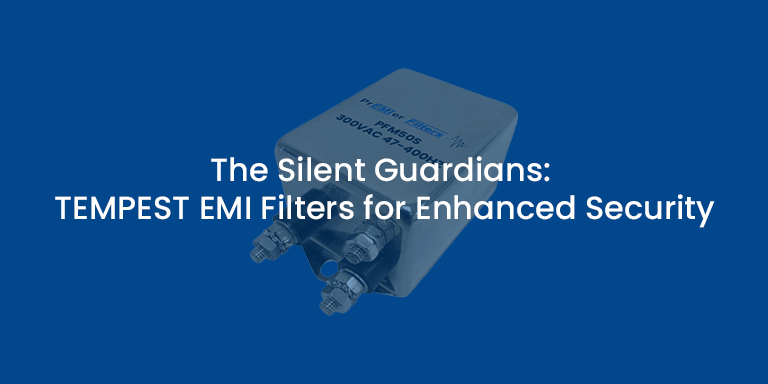
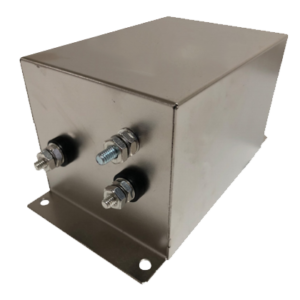
An EMI filter is typically installed at the power entry point of equipment to suppress this unwanted energy below acceptable operational thresholds and ensure compliance with regulatory standards. These standards are governed by organizations such as the FCC, EN/CE, and various military and government agencies. The primary frequency ranges of concern span from 10 kHz to 10 MHz in military applications and 150 kHz to 30 MHz in commercial and industrial environments. From a design perspective, EMI filters rely on carefully engineered passive networks, primarily inductors and capacitors to provide broadband attenuation of both common-mode and differential-mode noise.
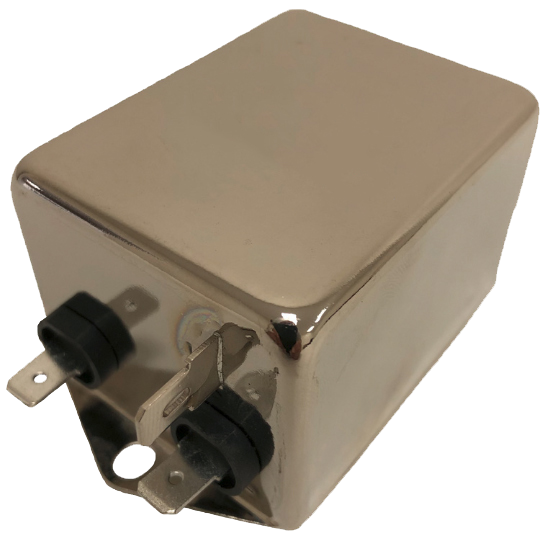
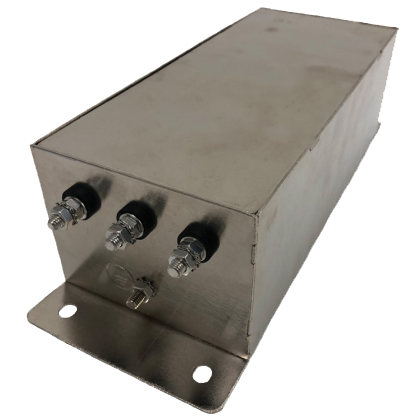
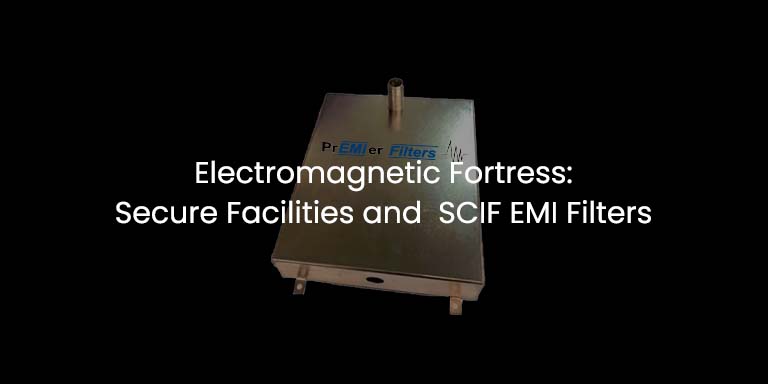
Premier Filter builds on these fundamentals with advanced engineering capabilities specifically tailored for high-security and mission-critical environments. As a trusted supplier of SCIF EMI filtration systems, we design and manufacture custom solutions capable of achieving 100 dB attenuation starting as low as 14 kHz and extending up to 40 GHz well beyond conventional filter performance ranges. Equally important, our designs maintain exceptionally low kVAR levels, minimizing reactive power impact on the electrical system, an achievement that differentiates us within the industry.
Our capabilities extend beyond performance alone. Premier Filter specializes in solving complex electromagnetic compatibility (EMC) and power quality challenges through a combination of advanced modeling, precision component selection, and proprietary design techniques. This allows us to deliver highly optimized solutions that meet stringent security standards without compromising efficiency, thermal performance, or long-term reliability.
In addition, Premier Filters is recognized for its rapid response and agile manufacturing capabilities. We understand that SCIF and secure facility projects often operate under compressed timelines. Our streamlined design-to-production process enables fast prototyping, testing, and delivery of custom EMI filters ensuring project schedules are met without sacrificing performance or compliance.
This combination of deep technical expertise, high-performance design, and accelerated delivery reinforces Premier Filter’s position as a leading partner for defense, government, and critical infrastructure applications where EMI control is not just important but mission essential.
Call +1 (657) 226-0091 or email info@premieremc.com to see how Premier Filters can deliver your project on-time and on-schedule.
FAQ
An EMI (Electromagnetic Interference) filter reduces unwanted electrical noise on power and signal lines, helping electronic equipment operate reliably. EMI filters are especially important in military, industrial, and other high-performance systems where interference can disrupt operation, degrade performance, or cause compliance failures.
EMI filters are available in several configurations, including single-phase, three-phase, AC, DC, and specialized military COTS EMI filters. Each type is designed for specific voltage, current, frequency, and environmental requirements across industrial, medical, commercial, and defense applications.
Choosing the right EMI filter depends on your system’s operating voltage, current rating, frequency range, and required compliance standards. Key factors to review include insertion loss, leakage current, mounting style, environmental ratings, and certifications to ensure the filter performs effectively in the intended application.
EMI filters are widely used in military and defense systems, industrial equipment, medical devices, telecommunications infrastructure, transportation systems, and commercial electronics. Any application that requires dependable operation and reduced electrical noise can benefit from EMI filtering.
Common-mode noise appears on multiple conductors at the same time relative to ground, while differential-mode noise appears between two conductors. Effective EMI filter design addresses both noise types to provide comprehensive interference suppression.
EMI filters should comply with relevant international and industry standards such as IEC, UL, and applicable MIL-STD requirements. Military COTS EMI filters are built to meet demanding defense and industrial expectations. Compliance ensures reliable operation, supports regulatory approval, and reduces risk in harsh environments.
For best performance, install the EMI filter as close as possible to the equipment power entry point, use proper grounding, and keep input and output wiring separated and as short as possible. These practices maximize noise suppression and maintain system reliability.
Insertion loss measures how effectively an EMI filter attenuates unwanted frequencies. Higher insertion loss generally indicates better noise suppression, making it a critical parameter for sensitive and mission-critical systems.
Passive EMI filters use inductors and capacitors to suppress noise without requiring power. Active filters use powered circuits to counteract interference. In military and rugged environments, passive EMI filters are typically preferred due to their reliability and simplicity.
EMI filters improve device performance, protect sensitive electronics, reduce signal errors, support compliance with EMC standards, and minimize downtime caused by electrical interference.